
Property Taxes in Billings, MT
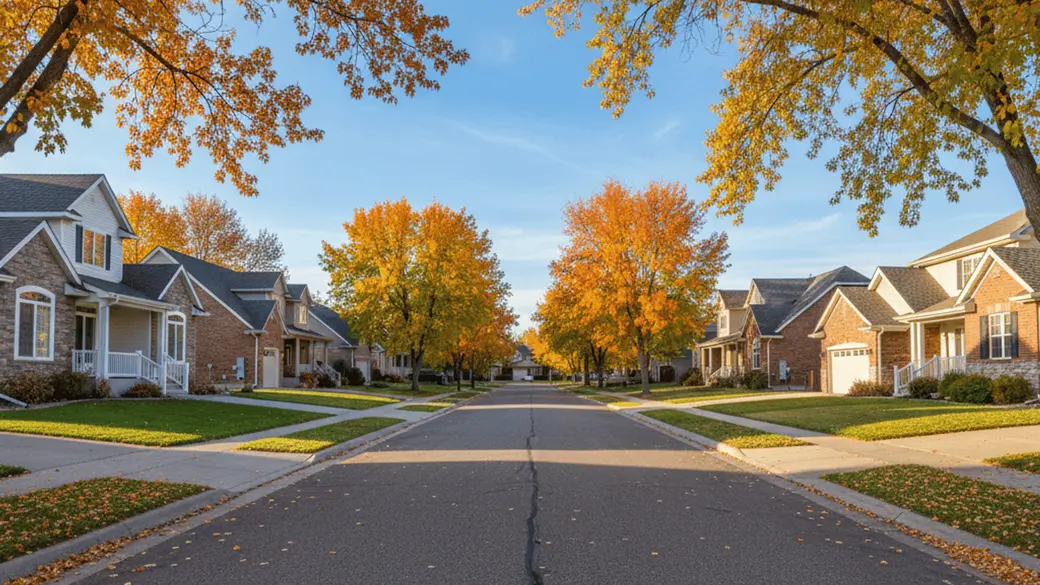
If you’re thinking about moving to Billings MT or you’ve just bought your first home here, you’ve probably heard the phrase "Montana has no sales tax" about a dozen times. It’s one of the biggest perks of living in the Treasure State. However, local governments still need to fund schools, fill potholes, and keep the fire trucks running. That is where property taxes come in.
For many residents, opening that assessment letter from the state can be a bit of a shock, especially with the rising home values we've seen in Yellowstone County over the last few years. The good news is that the system is transparent once you understand the math, and there are new relief measures in place for 2025 that can help soften the blow.
Let’s break down exactly how property taxes work in Billings, what you can expect to pay, and the deadlines you absolutely can’t miss.
Understanding the Landscape: Who Does What?
Before we look at the dollar signs, it helps to know who is actually pulling the strings. It’s a common misconception that the county decides how much your home is worth. In reality, the Montana Department of Revenue is responsible for appraising your property to determine its Market Value. They run this cycle every two years.
On the other hand, the Yellowstone County Treasurer is the office that actually sends you the bill and collects the money. They are essentially the bank teller for the process.
Finally, the actual tax rate—or mill levy—is determined by local voters and boards. When you vote on a levy for Billings School District 2 or a city bond for public safety, that directly impacts the "mills" used to calculate your final bill. This structure means that while your home value might go up, your taxes don't necessarily have to rise at the exact same rate if the local budget requirements shift.
How Property Taxes Are Calculated in Yellowstone County
If you try to do the math on a napkin, you might get confused because Montana uses a unique formula. You don't just take your home's value and multiply it by a tax rate. There is a middle step called "Taxable Value."
Here is the simple version of how it works:
- Market Value: This is what the Department of Revenue thinks your home would sell for.
- Taxable Value: The state applies a percentage to your Market Value to get a smaller number. (We will cover the specific 2025 rates in the next section).
- Total Tax: That Taxable Value is multiplied by the local "mills."
Think of "mills" as slices of the budget pie. One mill equals $1 of tax for every $1,000 of taxable value.
The total number of mills varies depending on exactly where in the county you live. If you are inside the Billings city limits, you pay City mills (roughly 74 mills) plus School District, County, and public safety mills. If you live further out in the county, your total mill levy might be lower because you aren't paying for city-specific services.
Current Billings Property Tax Rates & Mill Levies
For the 2025 tax year, the state has introduced a tiered system for residential properties (Class 4). This is a change from the old flat rate system and is designed to help homeowners in the face of rising appraisals.
The New 2025 Tiered Taxable Rates: Instead of one rate for your whole home value, the state now breaks it down:
- The first $400,000 of market value is taxed at 0.76%.
- Value between $400,000 and $1.5M is taxed at 1.10%.
- Value over $1.5M jumps to 2.20%.
It is important to note that these percentages are used to find your Taxable Value, not your final bill.
So, what is the "Effective" Tax Rate? When you cut through the complicated math and just look at your total bill divided by your home's price, the effective tax rate in Billings generally lands between 0.85% and 0.97%.
To put that in perspective, the national average is roughly 1.02%. So, despite the sticker shock of recent assessments, Billings remains competitive, especially when you factor in the cost of living in Billings and the lack of sales tax.
Note for business owners: Commercial properties operate on a different schedule, typically assessed at 1.4% for the first $400,000 and 1.89% for anything above that.
Deadlines: When Are Property Taxes Due?
Missing a tax deadline is an easy way to throw money away on penalties. In Yellowstone County, your property tax bill is sent out once a year (usually in October), but you can pay it in two installments.
- First Half: Due by November 30 (or the next business day if it falls on a weekend).
- Second Half: Due by May 31.
If you miss these dates, the penalty is strict. You will be hit with a 2% immediate penalty on the amount due, plus interest that accrues at 5/6 of 1% per month.
How to Pay You have a few options to keep the treasurer happy:
- Online: The Yellowstone County website allows payments, but be aware that credit card processors usually charge a fee of around 2%. E-checks are typically free or very low cost.
- Mail: You can send a check directly to the Treasurer’s office.
- In-Person: You can walk into the Yellowstone County Courthouse to pay directly.
Exemptions, Rebates, and Relief Programs
If the numbers are looking a little high, you might qualify for relief. The state has rolled out specific programs to help residents stay in their homes.
The 2025 Property Tax Rebate For the current tax year, Montana is offering a rebate of up to $400 for eligible homeowners. This is a crucial benefit to claim.
- Requirement: It must be your primary residence. Investment properties and second homes do not qualify.
- Action: You usually need to apply between August and October. It is not automatic; you have to ask for it.
Targeted Assistance Programs Beyond the general rebate, there are long-standing programs for specific groups:
- Property Tax Assistance Program (PTAP): This is designed for homeowners with lower incomes. If you qualify, the state reduces your taxable valuation by 30% to 80%, which directly lowers your bill.
- Montana Disabled Veterans (MDV): This provides significant tax relief for 100% disabled veterans or their surviving spouses.
- Elderly Homeowner/Renter Credit: This acts as a credit on your state income tax return (up to $1,150) based on how much property tax you paid relative to your income.
Billings vs. Montana and National Averages
When you look at the best neighborhoods in Billings, you might wonder if you are paying a premium compared to the rest of the country.
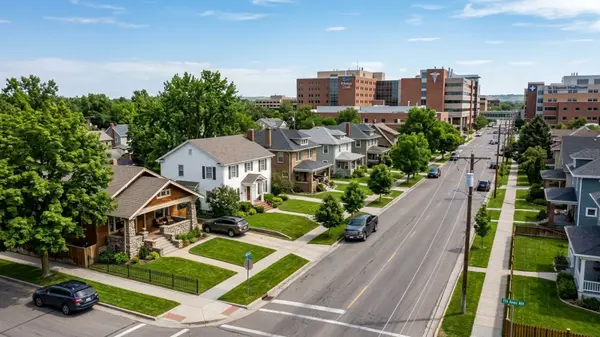
Nationally, Billings is actually in a "sweet spot." While our home values have risen, our effective tax rate is lower than the national average. Compared to other Montana hubs, Billings is fairly standard. You might pay slightly higher taxes here than in a very rural county with fewer services, but you are also paying for proximity to top-tier hospitals, paved roads, and the largest school district in the state.
Missoula often sees higher effective tax burdens due to different mill levy structures, while areas like Bozeman face issues purely due to astronomical property values. In Billings, the balance between service quality and tax cost is generally seen as reasonable by most residents.
Impact on Investors and Second Homeowners
If you are looking into investing in Billings real estate, the math changes slightly. The state relief measures are heavily weighted toward primary residents.
As an investor:
- You generally cannot claim the $400 rebate on a rental property.
- You do not qualify for PTAP or homestead exemptions.
- Short-term rentals (like Airbnbs) are under scrutiny; depending on how they are classified, they may eventually be subject to commercial rates or higher residential tiers if the values exceed the $1.5M threshold.
- Investors should always run their cash-flow numbers assuming the full, non-discounted tax bill to be safe.
Final Thoughts on Billings Property Taxes
Property taxes are just one piece of the puzzle, but they are a significant annual expense that you need to budget for. While nobody loves paying them, in Billings, they replace what would otherwise be a heavy sales tax burden on your daily purchases.
For the most accurate numbers on a specific home, always check the property record on the Yellowstone County Treasurer’s website or the Montana Cadastral. And if you are buying a home this year, don't forget to mark your calendar for that rebate application window—it’s essentially free money left on the table if you miss it.
Frequently Asked Questions
What is the property tax rate in Billings, Montana?
There isn't a single flat rate, but the "effective" rate is typically between 0.85% and 0.97% of the home's market value. The actual calculation uses a tiered rate (0.76% for the first $400,000 of value) applied to your assessment, which is then multiplied by local mill levies.
How often are property taxes paid in Montana?
Property taxes are billed annually but paid in two installments. The first half is due on November 30, and the second half is due on May 31.
Does Montana have a property tax rebate for 2025?
Yes, for the 2025 tax year, there is a rebate of up to $400 available. This applies only to your primary residence, and you must file a claim during the open application window (typically August through October) to receive it.
How can I lower my property taxes in Billings?
You can apply for the Property Tax Assistance Program (PTAP) if you meet income requirements, or ensure you claim the state rebate. Additionally, check your property appraisal from the Department of Revenue; if you believe the market value is incorrect, you can file an appeal to potentially lower the valuation.
Who sets the mill levies in Yellowstone County?
The mill levies are set by various local boards and voters, not the state. This includes the Billings City Council, School District 2, and county commissioners, who determine how many mills are needed to fund their annual budgets.
Categories
Recent Posts


Broker License ID: RRE-BRO-LIC-64264
+1(406) 850-3065 | shawna.morales@engelvoelkers.com